Small Cities Co-Lab tote bag

Co-Lab

2025

View full agenda

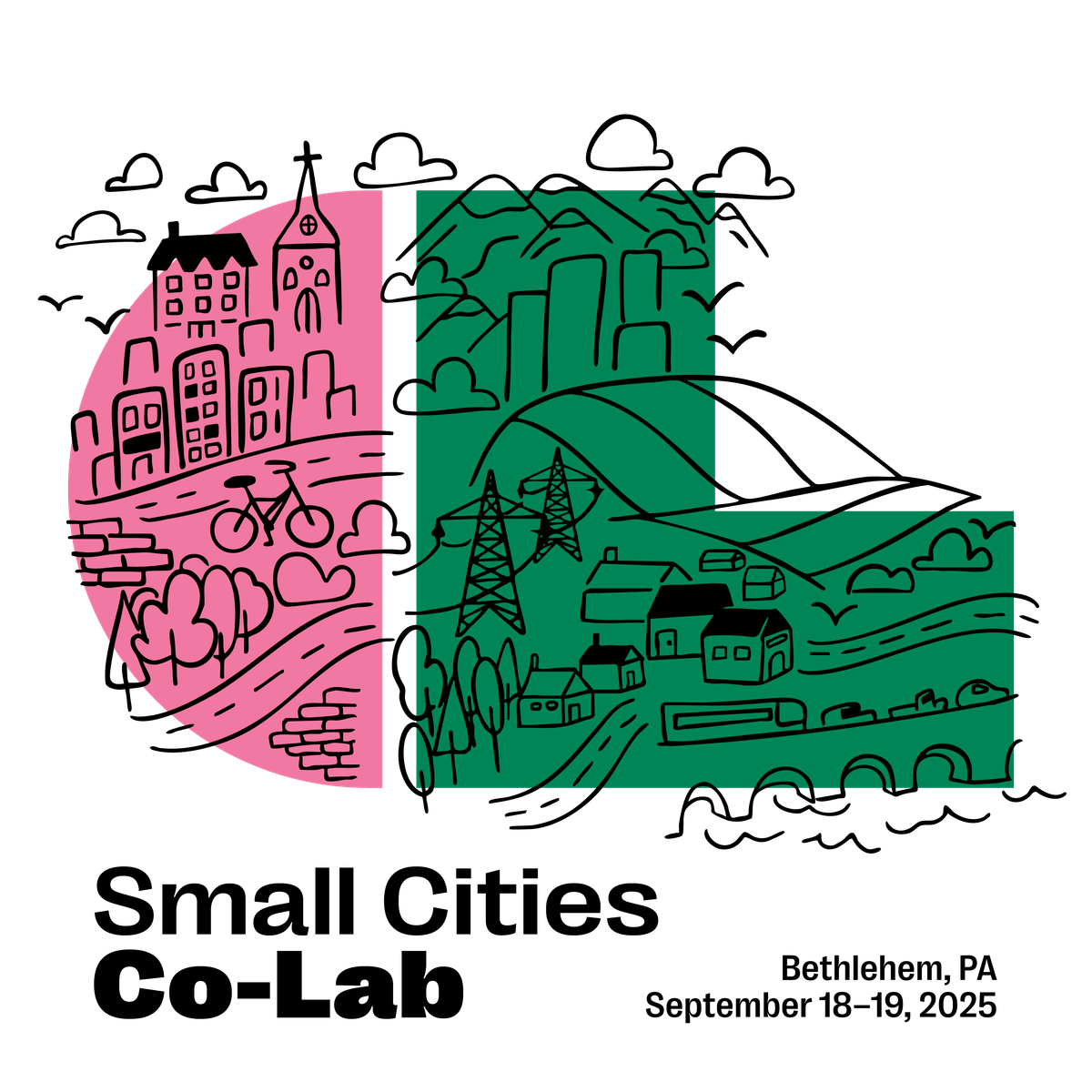
Welcome to the 2025 Small Cities Co-Lab! We are so excited to have you join us in Bethlehem, our own small city, for two days of conversation, reflection, learning, and action.

The core mission of the Small Cities Lab is to help close the knowledge and resource gaps faced by smaller places across the country. Central to this is building networks of colleagues working across sectors, regions, and disciplines who live in or simply care deeply about small cities. This inaugural Co-Lab convening is the first step in establishing a new small cities network, and something we hope will help increase our collective knowledge and jump-start collaborative projects.

Since embarking on this work, we are often asked: "What is a small city, anyway?" While it's tempting to start with a population range (100,000? 250,000?), we know that those numbers fail to capture the huge variety of smaller places where the majority of Americans live. Over the next two days of facilitated discussions, presentations, and workshops, we can't wait to learn more about what small cities are and why they matter.

Onward!

Karen Beck Pooley and Wes Hiatt

Small Cities Lab Co-Directors

Outcomes

This series is an outcome of the Co-Lab that took place in September 2025, convening 70 cross-sector participants from the Mid-Atlantic, Northeast, and Midwest. The goal of the convening was to understand more about what small cities are and identify patterns about challenges and opportunities facing small cities.

Through facilitated exercises, participants surfaced recurring themes that are important attributes, conditions, and experiences in small cities, which gave rise to five booklets: an introduction, followed by four thematic volumes. The four themes include Housing, Waterfronts, Social and Cultural Resources, and Meds and Eds. Each volume distills key insights from the Co-Lab, elevates emerging questions, and features contributors whose work speaks directly to these themes. Every release is paired with a virtual Lunch and Lab, where featured contributors expand on their work and join a live conversation.

Introduction

Small Cities Co-Lab: Introduction Booklet

The Small Cities Lab Co-Lab booklet series features insights across four reoccurring themes: Housing, Waterfronts, Social and Cultural Resources, and “Meds & Eds” Cities. Distilled from our first convening, these resources showcase how small cities organize and understand themselves.
Read more

Housing

Small Cities Co-Lab: Housing Booklet

This booklet looks at how small cities move from regulatory reform to real housing production. Across the country, cities are adopting new zoning codes and policy strategies, yet many struggle to translate reform into new projects on the ground. It explores what's driving growing interest in middle housing and diverse housing types, and what stands in the way of building more of what communities need.

Read more

Waterfronts

Small Cities Co-Lab: Waterfronts Booklet

This booklet explores how small cities relate to their waterfronts as shared natural and civic assets. Featuring contributors working across design, planning, and community development, it surfaces open questions about how waterfront spaces are reimagined, activated, and stewarded in small-city contexts.

Read more

Social and Cultural Resources

Small Cities Co-Lab: Social and Cultural Booklet

This booklet examines inclusion and belonging in small city life. Small cities are often praised for close-knit communities, but participants described a persistent divide between those who are "from here" and those who "came here." Drawing on cities across Pennsylvania, the Midwest, and Northeast, it traces how social and cultural resources, such as festivals, traditions, and civic institutions, shape belonging, and asks whether they can help dismantle long-standing insider-outsider divides.

Read more

Anchor Institutions

Small Cities Co-Lab: Anchor Institutions Booklet

This booklet examines what it means for small cities to build local economies around medical and educational institutions. Following the decline of manufacturing, many small cities' economies transitioned toward education and healthcare, as these institutions were seen as less likely to relocate and benefited from significant government investment and research funding during those decades. As anchor employers, meds and eds bring investment and stability, but also hold outsized land, capital, and political power, often straining housing and community relationships. It looks at how these institutions can become more effective, accountable partners in local governance.

Read more